
Social Justice, Identity, and Language in Oaxaca:
Summer study abroad for heritage speakers
Application Deadline
March 16, 2026
Zoom info session
March 2, 2026, 7:00 PM Chicago time
Link here
Follow us for updates
Join our email list here
Scholarships
See here for a list of scholarships.
Application Process
Go here and click “Apply now”
Application Deadline: March 16, 2026
How did you feel traveling abroad alone?
Tanya answers.
What was your living situation like?
How has your Spanish ability benefitted from the program?
Hear from alumni
This program is for heritage Spanish speakers -- bilinguals who have been in contact with Spanish through their homes. It allows you to complete your language requirement or take courses in your major/minor in a diverse environment. If you've been to Mexico but not to Oaxaca: IT IS DIFFERENT in its history, geography, culture, crafts and food, and vibrant indigenous presence!
All courses respect and build on heritage speakers' varieties of Spanish, and focus critically on issues of bilingualism and social justice.
No matter what your major, this program will increase your formal written and spoken Spanish. It is especially well-suited for students majoring in Spanish, Latin American & Latinx studies, education, health sciences/medicine, urban and rural development, linguistics/bilingualism, arts and architecture, tourism, communication, law & public policy, and sociology.
We take field trips most Saturdays to local sites of archaeological and cultural interest, including World Heritage site Monte Albán and visits with local communities.
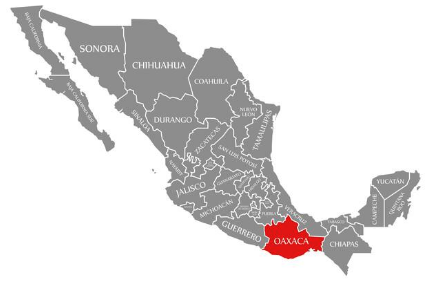
Who: Heritage Spanish-speaking college students anywhere in the U.S.
What: Learn about bilingualism and social justice, receive credit for your major/minor, visit important archaeological and cultural sites
When: June 27-July 25, 2026
Where: Oaxaca, Mexico, located in the south of the country
Application Deadline: March 16, 2026
Oaxaca Who, What, When, Where
All students take two (2) courses for a total of 6 or 7 UIC credit hours. All syllabi are found here.
One (1) Spanish course based on placement:
SPAN 114: Spanish for Heritage Speakers II (4 credits)
SPAN 202: Spanish Grammar (3 credits)
SPAN 204: Advanced Composition (3 credits)
SPAN 321 Spanish for Health Personnel II (3 credits)
SPAN 363: Spanish in Society (3 credits)
SPAN 375: Current Topics in Hispanic Studies (Independent Study). 3 credits - see description below.
One (1) Mexican culture course taken by everyone:
SPAN 360 (can count as LALS 399). Much of the course consists of guided field trips.
What courses can you take?
Breakdown of Amount Paid to UIC:
Tuition - $2000 (less than 2 courses taken at UIC)
Housing and Food - $2000
Airport Pickup - $100
Orientation - $50
All Saturday Trips - $800
Cultural Workshops - $450
Estimated Total Paid to UIC: $5400*
*If more than 12 students commit to the program, the total cost may go down.
Breakdown of Out of Pocket Costs:
Airfare - $450 (check out www.kiwi.com for discounts)
(Optional) Spending Money for 4-Weeks- $300
Total Estimated Out-of-Pocket: $750
Planning Financially
Monday:
9am-1pm Spanish class.
1-4pm Eat at home; free time.
4-6pm Workshop or cultural activity.
Tuesday:
9am-1pm Spanish class.
1-4pm Eat at home; free time.
4-6pm "Intercambio" with a Oaxacan college student.
Wednesday:
9am-1pm Spanish class.
1-4pm Eat at home; free time.
4-6pm Workshop or cultural activity.
Thursday:
All day activity For example El Jardín Etnobotánico
Friday:
9am-1pm Spanish class.
1-4pm Eat at home; free time.
Saturday:
9am-3pm Field trip to sites such as Monte Albán, Teotitlán del Valle,Mitla, Hierve el agua, etc.
Sunday:
Free Day
A Typical Week in Oaxaca
-
YES, all U.S. college students who are heritage Spanish-speakers are eligible.
Here is a video of UC-Berkeley student Tanya Rodriguez talking about her experiences.
-
Even if you already graduated, you may enroll as a “non-degree seeking” UIC student.
-
Yes, there are some additional steps. Please see this website.
-
Faculty in the UIC Study Abroad Office, in the UIC Spanish Department, and at school in Oaxaca are committed to creating rewarding, inclusive, and safe experiences for all of our students. One of our 2022 participants said this:
“I think Oaxaca in particular is special in that it provides safe spaces for queer expression, and in some instances even centers it. Learning about the muxe community contributed to my decision to go. Many of the other students on the trip were in the LGBTQ+ community, too, so I felt very comfortable and empowered to talk about how these issues intersected with our cultural and family backgrounds.”
-
All students live with a host family, usually with at least one other student from our program. The homes are no more than a 15 minute walk from school. You will have a private bedroom. Some students have a private bathroom, others share a bathroom with one other student. You will have three meals every day. Families are good about accommodating dietary and allergy needs (food, pets, etc).
As you can see in our video, past students have formed close lasting bonds with their Oaxacan families and several have returned to visit them! You/your parents may contact the host family before your arrival to get to know them.
-
See here!
-
If you are eligible for this course, you will carry out a research project that is related to some aspect of Oaxacan culture and life. This could be at a hospital, in an elementary school, about a local indigenous language, or some other relevant topic. This is carried out with the close assistance of the program director, UIC professor Kim Potowski.
Past research topics completed by Oaxaca summer study abroad students:
Muxes: A student on the 2022 program read and viewed documentaries about muxes, made contacts with members of the Oaxacan muxe community, and interviewed several of them about their experiences. We were all invited to their parade and ‘vela’ (giant party) in August!
Access to healthcare: Only for students with some basic medical training. In 2017, one of our students volunteered at the local Red Cross and assisted walk-in doctors and nurses with patient care. She also completed a research project about the Mexican healthcare system and the different degrees of access afforded to members of society.
Community museums: What happens when the federal government comes to your town and wants to remove your ancestor’s artifacts to display them in a national museum? In 2022, one of our students researched how several Oaxacan communities have created their own museums to prevent this. She got to visit stakeholders at several museums and interview an INAH professor who helped form 24 community museums.
Women in ‘usos y costumbres’: In 2019, a student interviewed members of a local indigenous community to learn about how women’s income from selling woven crafts has changed their traditionally limited roles within the indigenous ‘usos y costumbres’ governance system. His paper was accepted at the Latin American Studies Association conference.
Diabetes treatment in Zapotec communities. A student on our 2023 program presented her research on this topic at the annual conference of the Society for the Advancement of Chicanos/Hispanics and Native Americans in Science.
Email Dr. Potowski at kimpotow@uic.edu to discuss what topic you might study.